Culinary Terms

To flute :
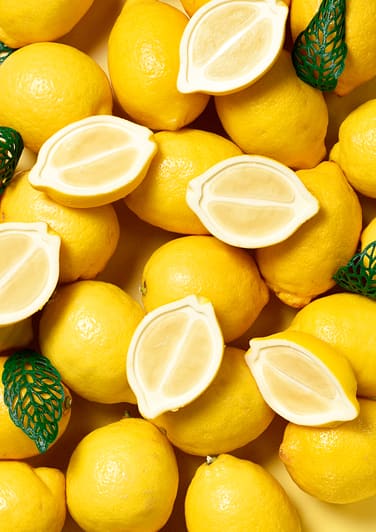
Cut long inward incisions on the skins of lemons or oranges with a canneleur.
Canneleur :
Tool used to cut strips of citrus zests.
To caramelize :
To apply a layer of caramel on fresh or dried fruits.
To caramelize :
To apply a layer of caramel on the inner sides of a mould.
To caramelize :
To colour an onion cut in half in a frying pan without fat, or on a hot plate.
Carcass :
Skeleton of an animal.
Wattle :
Reddish colored fleshy organ that can be found under the beak of some birds.
Chocolate coating :
Coat a cake (sponge cake, biscuit joconde, biscuit de savoie) with a layer of melted chocolate with a brush in order to prevent the cake from breaking into pieces when it is soaked in syrup. Also prevents it from sticking to the service dish. Once cold the layer of chocolate wraps the cake like a shell. This device is used only on chocolat-based cakes.
Breadcrumbs :
Ground and sifted dried bread.
To clean :
Remove the central guts of crawfish or scampi before cooking them.
Warming pan :
Pan with salted scalding water used to reheat boiled vegetable or pasta.
chaufroiter :
to coat meat or fish with a "chaud froid" sauce.
To grease :
Spread a layer of butter or flour, or a piece of greaseproof paper on the bottom and the inner sides of a mould. You can also line the mould with lady fingers for instance.
Chiffonnade :
Shredded salad.
Chinois :
Small iron conical strainer used to strain sauces. There are two sorts of strainers: the traditional one and cheesecloth.
To strain :
To pour liquid into a strainer.
To notch :
To mark the sides of flaky pastry which requires rolling out several times before the cooking so that they stick together and cook evenly.
To mince :
A way to finely cut bulb (such as an onion) using this particular method.
lemon rub :
Rub the surface of fruit (eg bananas) or vegetable (eg avocados) with lemon to avoid oxidation.
Civet :
Stew generally binded with the blood of the animal. Originally, this dish was flavored with civette (chive), hence the name.
To clarify :
To make a soup or a jelly clear.
Clarify :
To separate butter from its milk solids by gently melting it.
To separate eggs :
To separate the yolk from the white of an egg.
To coat rice :
When making rice pilaf you coat raw rice with oil or warm butter.
To coat :
To completely cover food with sauce or cream.
To coat :
To cover food evenly by dipping it or by coating it (fritter, chocolate).
To thicken :
To alter or thicken some preparations by adding jelly or gelatine.
To stew vegetable :
To slowly cook onions or peppers at a low temperature on a hotplate.
To crush tomatoes :
For tomatoes. Blanch and cut them in halves. Then seed and slice thinly. Turn them round a quarter and cut them in dice.
To candy :
To preserve various fruit-based or vegetable-based mixtures (small onions, peppers, lemons, cherries) in oil, alcohol, vinegar or sugar.
To stuff with a slice of truffle :
Gently cut the skin of a poultry or a game bird or fish and slip in a slice of truffle.
Roe :
Orange pink parts of shellfish or scallops' stomachs.
To become rubbery :
when a dough or mashed potatoes become rubbery
Cordon :
Sauce poured evenly around a dish so as to form a sort of cord.
Spatula :
Small supple rectangular plastic tool you use to scrape out the bottom of containers so as to waste a minimum of the mixture when you transfer from one container to another.
To scrape out :
To remove a mixture or what is left of a mixture from the surface of a container with a spatula.
Cornstarch :
Corn flour .
To spice up :
To heighten the flavour of a dish by adding ingredients (eg: meat glaze) or by reduction.
To dress :
To shape a dough on an plate or in a mould with a uniform or a fluted piping bag (eg : to dress choux).
coulis :
Thick sauce made by pureeing food (raspberry sauce, tomato purée ...).
crown :
To arrange in a ring shape : line the bottom of a dish with a dressing and leave a space in the middle to lay another dressing (wreath or turban of rice).
Coating :
Chocolate with a high cocoa butter content, used in pastry-making and in confectionery.
To crimp :
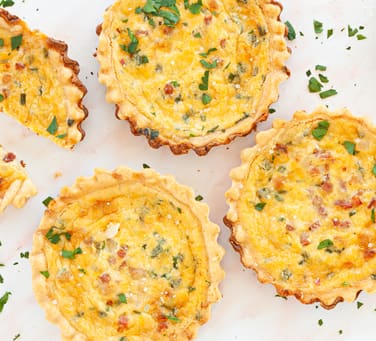
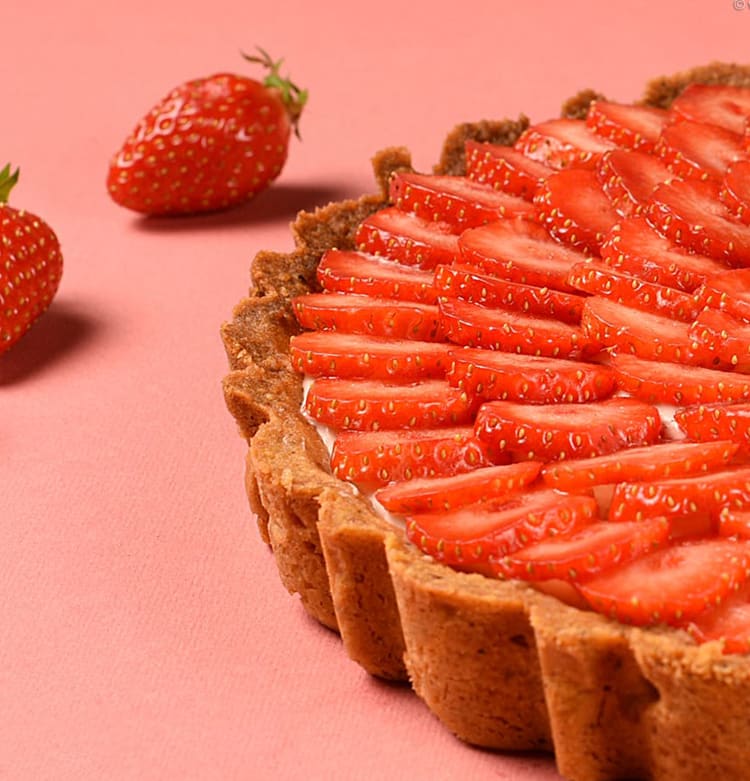
Flute the rims of tarts or pies to improve their presentations.
Cristallized :
When a sugar syrup has cristallized.
Parson's/Rump :
Last backbone where is tied the birds tail feathers. The croupion must be fatty.
Croustade :
Small puff pastry patty with various shapes made from pastry scraps.
To shred :
To shred salt cod flesh between your fingers once it is cooked (poached).
To crush nuts :
To grind nuts (almonds, hazelnuts...) with a pestle.
To prebake a pie shell :
To prebake a pie shell without any filling except aluminium foil covered with beans or any adequate weights so that the dough does not rise during the baking process. Halfway through cooking remove the foil so that the centre bakes properly.
Cooking :
To cook. Generally used for a liquid in which food cooks.
Cuisson à blanc :
La cuisson à blanc est conseillée pour les tartes ou les quiches destinées à contenir des ingrédients liquides. Il s'agit d'une pré-cuisson de la pâte au four avant qu'elle ne soit garnie. Avant d'être enfourner, la pâte sera recouverte d'un papier sulfurisé sur lequel seront disposer des noyaux de cuisson qui éviteront à la pâte de gonfler durant cette pré-cuisson.
Stainless steel bowl :
A stainless steel container in the shape of a salad bowl, but the bottom is either rounded or flat. It is used over heat to make all sorts of preparations.
To cut crosswise :
To cut (mushrooms, artichoke hearts) diagonally.
To cut into sections (vegetables) :
Cut certain vegetables in large long pieces (sections of leeks, carrots).
To cut into sections (meat, fish) :
Cut food into pieces of the size wanted according to the nature of the food.
Cutter :
Iron or plastic tool with various shapes used to cut doughs or other culinary preparations into shapes. There are uniform cutters that have smooth and sharps edges but also fluted cutters that have sharp and honeycombed edges.
To cut the fat off :
To remove the surplus of fat from a piece of meat.
To cut up :
To cut into different parts a fairly large piece of meat.